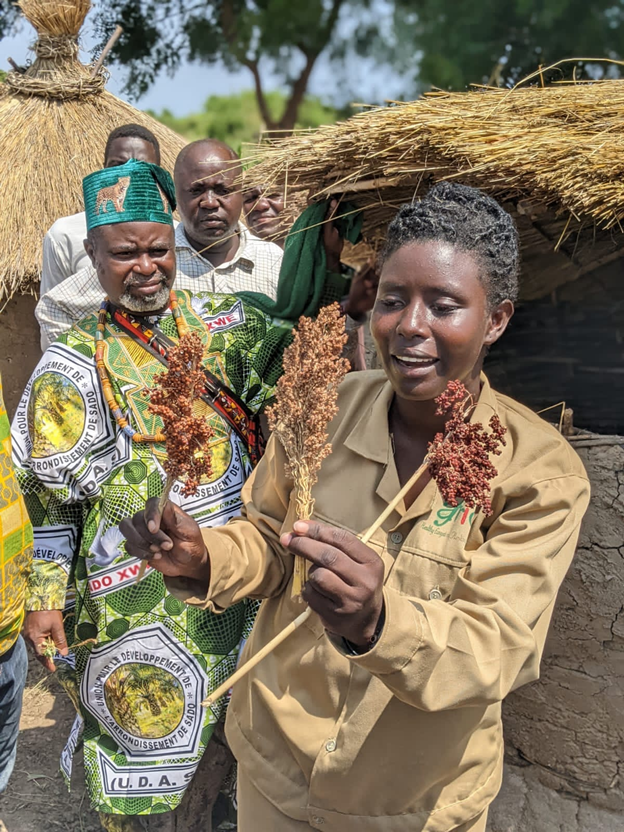
AFRICE’s Community Seed Learning Center transforms farming in Buliisa amidst pressure from oil and gas activities
At the heart of Buliisa district, where the pressure of oil and gas activities, land degradation and climate change weigh heavily on smallholder farmers, a shift towards sustainable farming is taking root. The African Institute for Culture and Ecology (AFRICE) has established a Community Seed Learning Center (CSLC) that is redefining how farmers grow food, save indigenous seeds and adapt to a changing environment.
What began as a demonstration site has become a home for practical solutions to balance livelihoods with shrinking fertile land for agriculture and erratic rainfall. Walking through the center, one is immediately struck by lush diversity. Banana plantations stand tall intercropped with chili, cassava and indigenous vegetables, all protected by layers of mulch that keep soil fertile and moist. Each plot is a demonstration of agroecology practices that blend the indigenous knowledge with modern sustainable techniques.
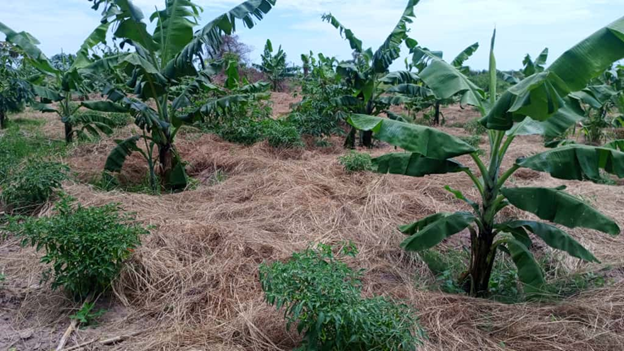
Figure 6: Banana and chili inter-drop with mulching at AFRICE’s Community Seed Learning Center in Buliisa, a practical example of agroecology in action
Located in Kitahura village in Buliisa Town Council, on semi-arid land that has for generations been reserved mainly for grazing and homesteads, the Community Seed Learning Center stands as a living example that transformation is possible. Supported by simple but effective irrigation systems, the once dry and unproductive land now thrives with different crops grown.
Here, farmers learn by practicing. Juliet Zalwango, AFRICE’s Agroecologist takes the farmers through practical lessons including intercropping, bio-fertilizer application, organic pest management, crop rotation and mulching.
“ Mulching reduces evaporation and suppresses weeds; organic manure and bio-pesticides replace chemicals, preserving soil health, and intercropping not only maximizes land use but also prevents pests and diseases, while ensuring a variety of foods for household consumption,” Zalwango explains. Zalwango says the Center is where farmers see that agroecology is not theory but practice.
Reviving indigenous seeds and preserving seed culture
One of the Center’s targets is the revival of indigenous seed varieties that are central to farming and culture in Buliisa. Traditional crops such as millet, cassava, Ndiwa, and bambara nuts have gradually disappeared under the dominance of hybrid seeds. With the Community Seed Learning Center, these varieties are not only being preserved but also multiplied and shared, giving smallholder farmers renewed access to resilient seeds.
But the revival goes beyond food production. Through practices of seed saving, community exchange, and inter-generational learning, farmers are rebuilding a vibrant seed culture. This culture encompasses not only the knowledge on sustainable farming practices and preservation but also the spiritual and social traditions that seeds carry. Indigenous seeds are tied to identity, heritage, and community life.
“Indigenous seeds are more than just food; they are part of our spiritual connection,” explains Dorcus Kandole, one of the women seed custodians. “They are stored in traditional granaries, exchanged during communal gatherings, and celebrated in rituals that bless families with abundance and resilience. Millet, for example, is not only a crop but also a symbol of blessings, used in rituals and ceremonies for abundance. That is why it must be conserved.”