AFRICE’s unique approach to community ecological governance, regenerative farming and indigenous seeds gains strong district support under a renewed partnership in Buliisa
The African Institute for Culture and Ecology (AFRICE) has attracted renewed district support in Buliisa after local government officials reviewed and appreciated its unique community-based approach, which connects indigenous farming knowledge, agroecology, regenerative farming systems, seed sovereignty, and community ecological governance.
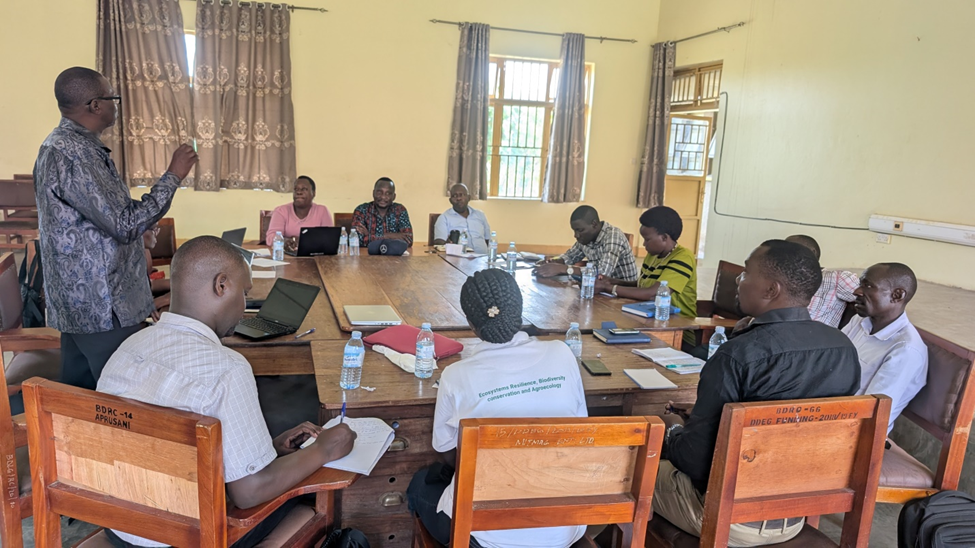
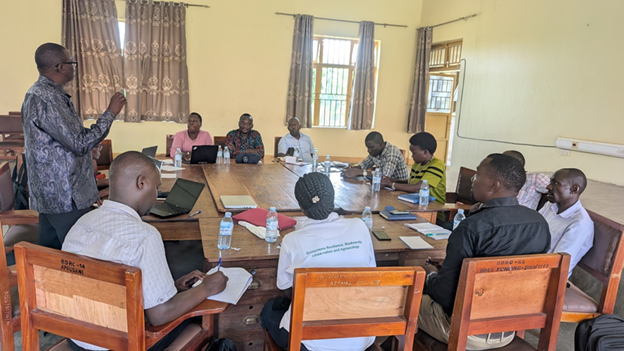
During a two-day engagement held on 16 and 17 March 2026, AFRICE and Buliisa District Local Government reflected on progress made under their long-standing collaboration and agreed on a new framework for partnership for the period 2026 to 2031.
The meeting chaired by the District Chief Administrative Officer, who was represented by Wanseko Town Clerk, Mr. Samuel Magambo, was attended by technical staff from agriculture, natural resources, production, fisheries, entomology, community development, and other departments. The meeting and field visit served as a practical evaluation of AFRICE’s work in Buliisa and recognition of its contribution to the district’s future priorities.
For nine years, AFRICE has worked with indigenous and local communities in Buliisa to strengthen traditional, ecologically sensitive, and regenerative farming systems. This work is grounded in the understanding that farming, seed systems, culture, and biodiversity conservation are deeply connected. AFRICE’s approach brings together women custodians of indigenous seeds, farmers, elders, and custodians of sacred natural sites and landscapes. Through practical farmer learning, it supports food security, biodiversity protection, and ecological stewardship rooted in community knowledge, while strengthening community ecological governance and restoring indigenous seed diversity.
District officials described the Community Seed Learning Center in Kitahura, Buliisa Town Council, which started three years ago, as one of the strongest practical example to this approach in the district. They appreciated AFRICE for establishing the center, which is gaining strong recognition as an important space for promoting agroecology, strengthening indigenous seed systems, advancing seed sovereignty, and restoring indigenous farming knowledge through practical learning.
Buliisa District Production Office,r Wycliffe Katulinde said the district will use the center for farmer field schools and to support the establishment of indigenous seed gardens. He noted that around 30 farmers have already started training from the center. He described the banana plantation at the center as unique in the district. He added that the district is ready to strengthen extension support and farmer mobilization so that more people can adopt the agroecology practices being demonstrated there.
During a joint field visit to the center, district officials appreciated the progress already made and called for closer increased collaboration between AFRICE and the District Production Department to expand farmer mobilization, technical support, and the replication of agroecology practices. They also proposed strengthening the center further through activities such as apiculture and fish farming, widening its role as a place for practical learning and community resilience.
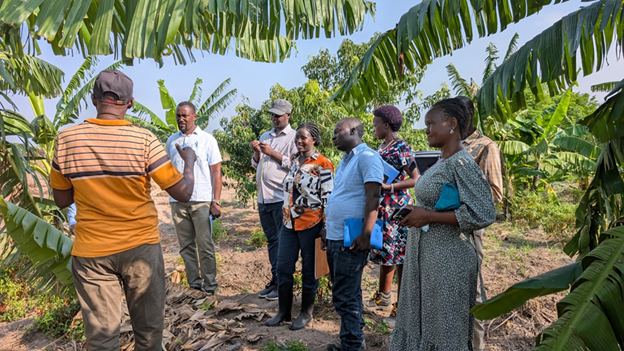
District officials further committed to assigning technical staff from the Production Office to support the center and to budgeting for the development of an indigenous seed garden at the site. Senior Agricultural Officer, Ms. Doreen Babihamaiso noted that farmer groups under the district’s farmer field schools are already waiting for space at the center to establish demonstration gardens for indigenous seed multiplication.
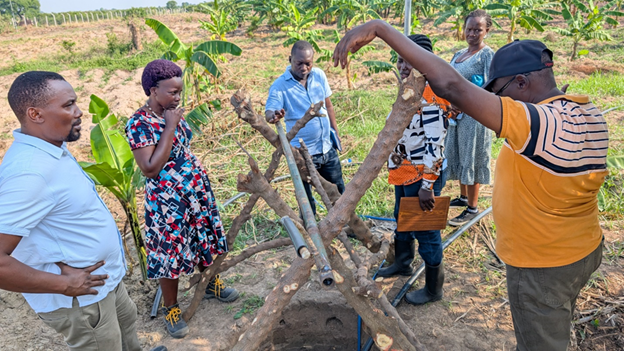
During the meeting, AFRICE Executive Director Dennis Tabaro emphasized that the organization’s work in Buliisa is grounded in indigenous farming systems that are inextricably connected to community ecological governance led by custodians of sacred natural sites and indigenous seeds. In that sense, he said, the center is a platform for restoring local seed systems, strengthening farming knowledge rooted in community realities, and supporting ecological governance.
This broader approach was reflected in the discussions on the ordinance on the customary laws and protection of sacred natural sites in Buliisa district. Participants noted that although the ordinance was signed in 2020, progress toward approval and operationalization has been slow. AFRICE raised concern over the delays, noting that the ordinance remains one of the most important outcomes of the long-standing partnership. Tabaro maintained that the ordinance provides a pathway for recognizing community governance systems and customary laws that protect ecologically and culturally important landscapes and ecosystems calling for its operationalization. Mr. Magambo recognized the slow progress and pledged that the district officials will continue following-up to move the process forward.
The renewed partnership was backed by concrete operational framework aimed at translating the shared vision into practice. These include AFRICE’s access to district operational plans for planning and resource mobilization, participation in quarterly stakeholder meetings and district budget processes, continued joint monitoring visits to the Community Seed Learning Center, attachment of a Production Department staff member to work alongside AFRICE’s field team, establishment of farmer field schools for different indigenous crops at the center, quarterly farmer mobilization and exchange visits, development of a joint proposals specifically on food security and nutrition and community ecological governance, following up the ordinance on protection of sacred natural sites and ecosystems and and continued coordination.
The renewed partnership is recognition of a broader community-rooted approach that connects regenerative farming, indigenous seeds, climate resilience, biodiversity protection, and ecological governance. For AFRICE and its partners, this renewed support is an encouraging sign that district leaders appreciate AFRICE’s contribution in building food systems and conservation pathways grounded in local knowledge, community involvement and protection of nature.
The AFRICE model is seen by the district and other partners as one of the solutions addressing community food sustainability and boosting community livelihoods and resilient processes for ecological governance.