Sacred site custodians strengthen indigenous seed farming
John Gafabusa, a custodian of sacred natural sites and the Chairperson of Association of Sacred Natural Sites in Buliisa district has for a longtime been known as a fisherman. But during a visit by the team from African Institute for Culture and Ecology (AFRICE) and Buliisa district to his garden at home in Songalendu in Buliisa Sub County, the story is changing. It is now about food, learning and seeds.
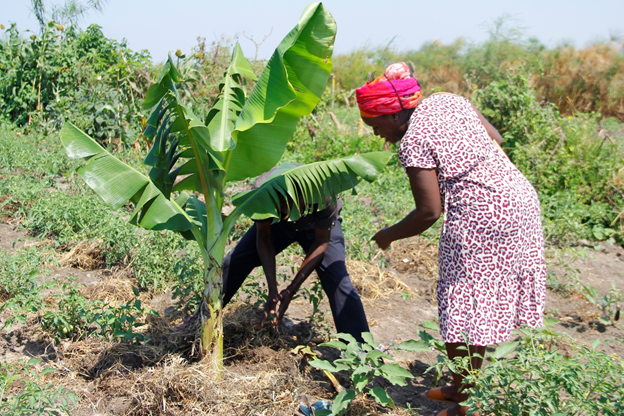
On his two-acre plot, neat rows of tomatoes stood out immediately. Around them were banana plants, sim sim, and vegetables grown through intercropping, one of the practices he has been learning through the Buliisa Community Seed Learning Center.
Proudly showing his garden, Gafabusa explained that his motivation began with the need to feed his family, but it has also grown into something more. In Buliisa, the Bagungu, with support from AFRICE and its partners are working to revive indigenous knowledge related to identifying, growing, storing, multiplying, and sharing local seed varieties. For custodians like Gafabusa, seeds are not just inputs for food production; they are connected to cultural identity and forms part of a deep connection with nature. The custodians use the indigenous seeds to perform rituals and other traditional ceremonies for food and cultural functions.
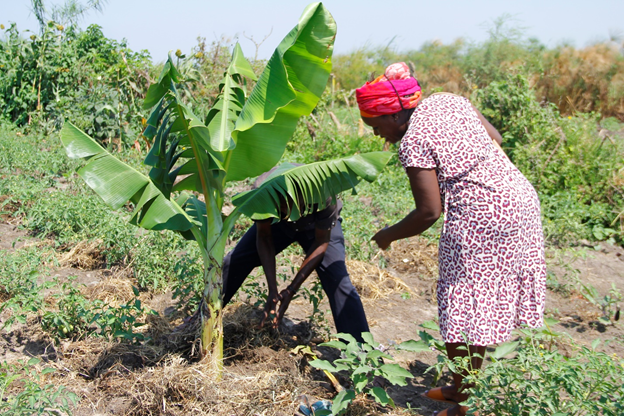
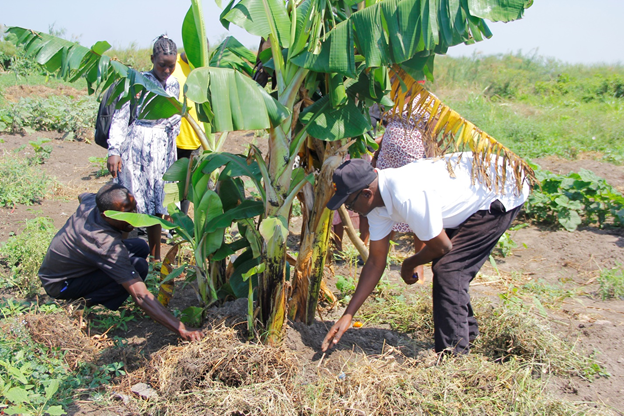
This shift is showing up across more households. Many custodians who had previously depended on fishing are now turning to farming; not only for survival but also to rebuild seed system that sustains ritual practice and community well-being.
“The fishers no longer catch enough fish on Lake Albert. We used to have Kikwere seasons (season when the moon is out) where fishing was not allowed for 2 weeks to give time for fish to breed. Then after this, we would have tega mku – where one would stand on the shoreline, throw the nets and within minutes, you get plenty of fish. These are some of the customary governance systems that we need to revive to keep the ecosystem healthy,” said Gafabusa.
The seed learning center as bridge
A big part of what has encouraged custodians to embrace farming is practical learning taking place at the Community Seed Learning Center established by AFRICE in Kitahura village, Buliisa Town Council. At the center, farmers, including custodians of sacred natural sites (Baramansi) learn through practice. Intercropping, mulching, organic pest management and the use of biofertilizers are demonstrated as art of efforts to strengthen agroecology and revive traditional seed diversity. The center has built the gap between custodians of sacred natural sites, women custodians of seed, women farmers and the youth through community dialogues, trainings in agroecology and intergenerational learning where they share their knowledge of farming systems related to conservation of nature. Here, the four categories meet to share their indigenous knowledge on how to protect the indigenous seeds and use the seeds to protect sacred natural sites as well as increasing food security and sustainability at household level.
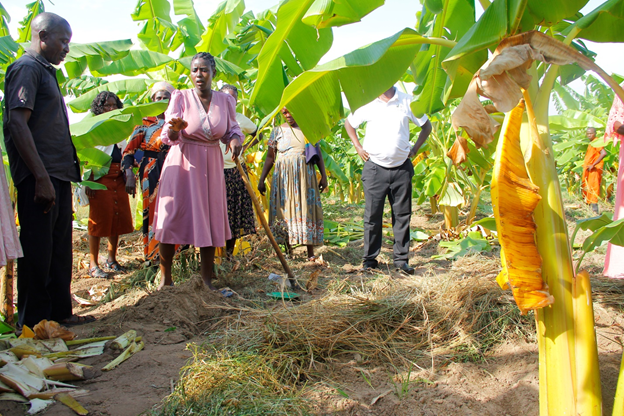
As a result, more farmers are establishing homestead gardens using organic farming methods. There is increasing interest in reviving indigenous seed growing and traditional ceremonies connected to sacred sites are strengthened with availability of needed seeds to perform such ceremonies.
AFRICE has been supporting farmers by fencing homestead gardens in order to reduce the need for them to move to distant areas such as Ngwedo Sub-county for cultivation. Traditionally, farmers have been trekking long distances to Ngwedo Sub County, a distance of about 5 miles, for farming. This practice of leaving home for extended periods to stay in temporary garden camps has been contributing to gender-based violence in homes, particularly where women leave their husbands while growing crops and attending to gardens for several weeks.
AFRICE Executive Director, Dennis Tabaro said industrial farming systems, together with hybrid seeds and chemical pesticides and fertilizers, are contributing to soil degradation and biodiversity loss. He said traditional farming methods work more closely with nature and help keep ecosystems healthy. That is why AFRICE continues to work with communities in Buliisa to strengthen sustainable food systems, protect indigenous seeds, and supports indigenous knowledge that connects people to the land and nature.